


Why become a Sustainable School?
Sustainability means “meeting the needs of the present without compromising the ability of future generations to meet their own needs.”
Evidence shows the broad positive impacts of sustainable schools on students, staff and the wider community.
Being a sustainable school raises standards and achievements, enhances well-being and attendance, improves motivation and behaviour, and promotes healthy school environments and lifestyles. It improves teaching and learning by “providing a meaningful, real-world focus which young people recognize as significant for their lives”.
- Final Recommendations of the Cambridge Primary Review (2010)
Empower today’s students to build a better future
- for People, Planet and Prosperity
Schools are incubators for ideas, innovation, and leadership. What students learn and experience at school will ripple into the wider community.
Healthy, sustainable and climate-resilient schools will lead to a healthier, more sustainable, and climate-resilient world.
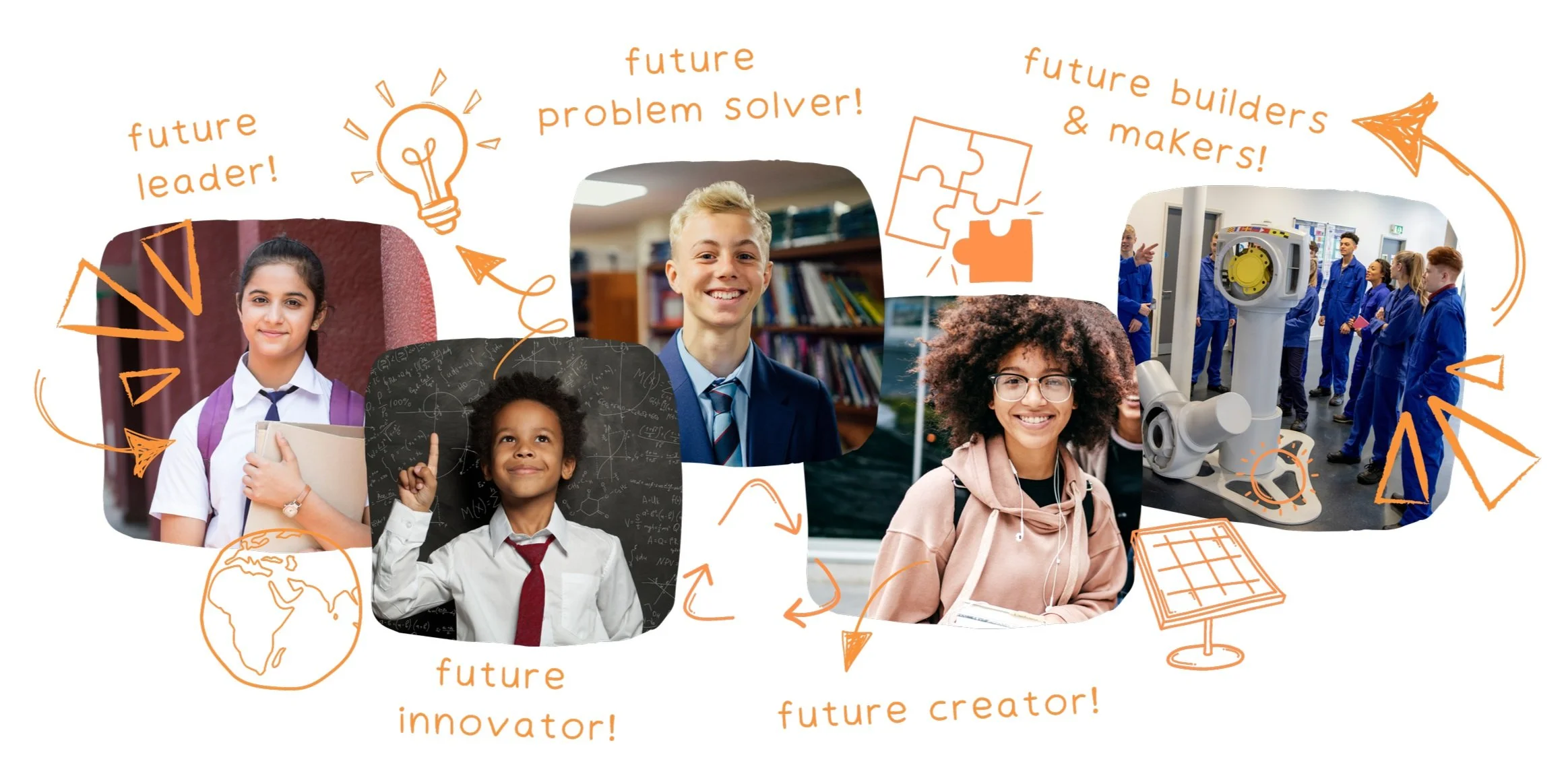
Schools have a unique opportunity—and a profound responsibility—to empower their students to shape a better future. School is where students gain knowledge, learn norms and expectations, and practice what it is to be a good citizen of the world. Schools have a responsibility to show students how to live sustainably by integrating these values into learning environments, everyday practices and curricula.
It’s not enough for students to learn about sustainability in theory—they need to see it in action.
“Pessimism turned to hope when [people] felt that they had the power to act. … the children who were most confident that climate change need not overwhelm them were those whose schools had decided to replace unfocused fear by factual information and practical strategies for energy reduction and sustainability”.
Final Recommendations of the Cambridge Primary Review (2010)
Become a Leader and Role-Model in your Community
Embracing sustainability is an opportunity for schools to demonstrate leadership in their community and to show that their school is looking ahead. Becoming a sustainable school improves the public image of a school, offering a competitive advantage - particularly as the governments, markets and society at large are increasingly concerned about environmental and social outcomes. The business case for sustainable schools extends to lowered operational costs, with estimates indicating that schools that do not pursue net-zero may spend 20-25% more over a 30-year life cycle based on increased energy and maintenance costs alone.

Student Wellbeing
Practical sustainability programs directly improve wellbeing. 60% of your people report feeling anxious about climate change. But when schools replace fear with action, students gain hope and confidence (read more!).
Cost-Effectiveness
Zero-energy and efficient schools save money—up to 33% less energy and 32% less water use. The small upfront cost (about 2% more) pays back 4x over the life of the building (read more). Savings go straight back into teaching and learning.
Future-Proofing
Sustainability future-proofs your school. Green schools enjoy a 72% stronger community image and surveys consistently find that Millennials and Gen Xers prefer to work for institutions with clear sustainability or climate policies and are more attractive to teachers and families. In a competitive education landscape, sustainability is a powerful differentiator.
More Benefits of School Sustainability
Student Empowerment
Hands-on sustainability learning equips students with real-world skills in problem-solving, STEM, and leadership. Environmental education is linked to stronger academic outcomes, especially in science and reading.
Health and Performance
Better air quality improves student focus, supports cognitive function and reduces asthma. Green cleaning and pesticide reduction protect students and staff from harmful chemicals. Access to green space boosts mental health and academic performance.
Building a Healthy, Sustainable Future
Schools are microcosms of society. What students see and practice here shapes how they act as citizens. Schools that live sustainability become laboratories of innovation, leadership, and community resilience.
Why the urgency?
In a blink of geological time, humankind has dramatically altered the face of our planet. Since the sweeping change ushered in by the industrial revolution, human activities have had such a significant and widespread impact on earth’s geology and ecosystems that the period is being called the ‘Anthropocene’. We have mined and felled and built and manufactured so much ‘stuff’ that the mass of human-made materials now outweighs all living biomass on Earth. Plastic is so ubiquitous that microplastics are being detected in rain and even in our bodies (including placentas, breastmilk, and even our brains). Wildlife populations have dropped 73% in just the last 50 years, and nearly 90% of the world’s marine fish stocks are now fully exploited or depleted. Emissions have soared in parallel with our burning of fossil fuels, leading to increasingly severe and unpredictable weather, that is beginning to impact everything from infrastructure and insurance to agriculture and food security. There is more and more scientific evidence of cracks in the interconnected systems that determine the stability, the resilience and the life support on planet Earth. Sustainability means: “Meeting the needs of the present generations without compromising the ability of future generations to meet their own needs.” What happens if we continue on our current trajectory?
The science is clear: The status quo is simply not sustainable. In fact, this moment requires more: regenerative sustainability: actively restoring, renewing, and enhancing natural systems, communities, and resources. While sustainability aims to "do no harm" by preserving resources for future generations, regeneration seeks to "do better" by improving the health and vitality of the systems we depend on.
We need to learn, adapt and think creatively to solve these challenges. We need to work with our shared planet, instead of against it. A habitable planet - and the future of life on earth - depends on it.
The risks are real, but the opportunities are equally powerful — to reimagine how we live, learn, and work; to build resilient economies; and to create communities that allow people and planet to thrive together. Schools have a critical role to play. They are where the next generation learns to navigate these risks and seize these opportunities — to think critically, act collaboratively, and design creative solutions for a rapidly changing world. When schools model sustainability in practice, they prepare students not just for the future — they prepare them to shape it.